
Table of contents
Share Post
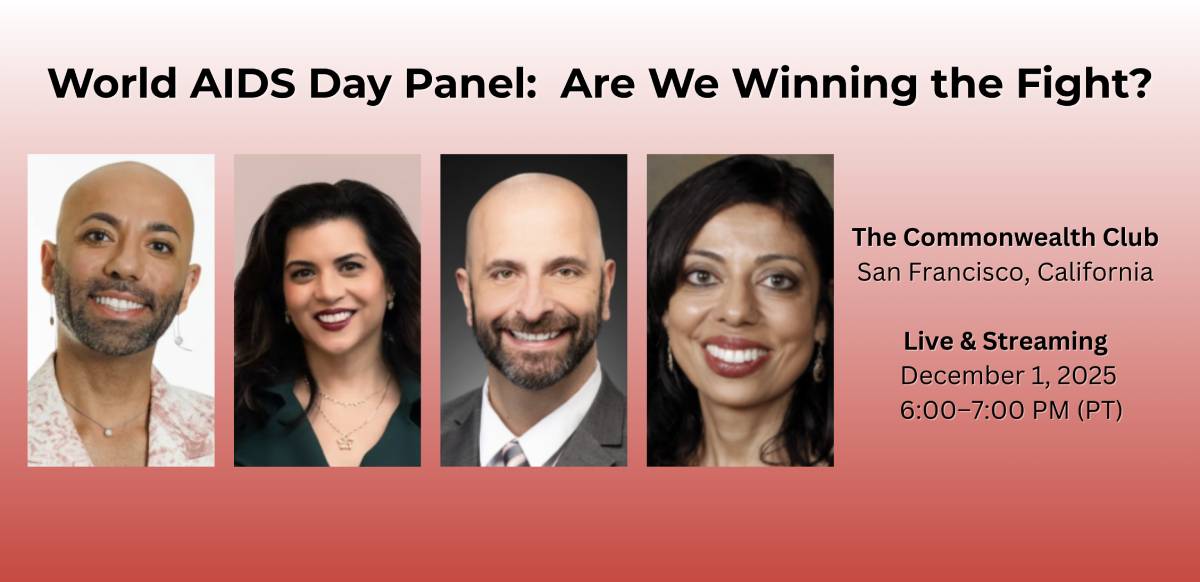
World AIDS Day is always a moment to look back at how far we’ve come—and about how far we still have to go. This year, that conversation took center stage at The Commonwealth Club in San Francisco, where Dr. Nas Mohamed, founder of Osra Medical, moderated the program “World AIDS Day: Are We Winning the Fight?” alongside leading HIV researchers, public health leaders, and long-term survivors. This event was sponsored by ViiV, along with the generous support of Kaiser Permanente.
Speakers:
- Demetre C. Daskalakis, M.D., M.P.H., Infectious Disease Physician; Public Health Leader
- Monica Gandhi, M.D., M.P.H., Professor of Medicine and Associate Chief, Division of HIV, Infectious Diseases, and Global Medicine, University of California, San Francisco; Director of the UCSF Center for AIDS Research; Medical Director, HIV Clinic (“Ward 86”), San Francisco General Hospital
- Nas Mohamed, M.D., Physician; Founder, Osra Medical; President, Alwan Foundation
- Tyler TerMeer, Ph.D., CEO, San Francisco AIDS Foundation
- Gary Virginia, Fundraiser; Activist; Volunteer; HIV/AIDS Survivor
Introduction by: Michelle Meow, Producer and Host, “The Michelle Meow Show,” KPIX+; Member, Commonwealth Club World Affairs of California Board of Governors
Introduction by: Kimberley Brown, PharmD, Vice President, Head of U.S. Medical Affairs, ViiV Healthcare
What emerged from that evening was a complicated but important truth: Scientifically, we have more tools than ever to prevent and treat HIV. Politically and structurally, many of the systems that should support those tools are under real threat.
Are We “Winning” Against HIV?
At Osra Medical, this is the world we work in every day—helping patients access PrEP and PEP, managing HIV medications, and integrating sexual health into routine, judgment-free care.
Panelists spoke about:
- Modern drugs that can suppress the virus so fully that people can live long, healthy lives.
- Long-acting treatment and HIV prevention options that reduce the burden of daily pills.
- Clear evidence that U=U (Undetectable = Untransmittable.
Policy Decisions Show Up in the Exam Room
The panelists made one thing very clear: political decisions are not abstract. They show up in exam rooms and community clinics in ways patients can feel immediately.
Some of the most sobering points raised included:
- Trans communities and immigrants are at particular risk when DEI language and protections are rolled back. People who already fear discrimination often delay or avoid care entirely.
- Research and funding restrictions that target gender identity or LGBTQ+ topics do not make these communities safer—they make it harder to design and fund programs that actually work.
- As prevention programs are weakened and stigma is emboldened, we’re likely to see more late diagnoses, more AIDS-defining illnesses at the time of diagnosis, and widening gaps in who benefits from modern HIV medicine.
This aligns with what we’ve long seen at Osra Medical: when healthcare spaces are not explicitly inclusive, many LGBTQ+ patients and people living with or at risk for HIV simply stay away. That’s why we designed a practice model and clinic environment that centers safety, time, and trust from the very beginning.
In a moment when some systems are pulling back, relationship-based care becomes even more critical.
Our model allows us to:
- Offer same-day or next-day appointments and longer visits, so conversations about HIV, PrEP, sexuality, and gender identity are never rushed.
- Provide direct access to your doctor via secure messaging and telemedicine, which is especially helpful if you’re navigating stigma at home, at work, or in your community.
- Integrate primary care, HIV prevention, and LGBTQ+ health instead of treating them as separate, siloed specialties.
For people who’ve had painful experiences in traditional clinics—being misgendered, judged, or dismissed—this kind of care can be the difference.
Key Takeaways From the World AIDS Day Conversation
The panel’s discussion echoed many of the themes we see in our own work. Here are a few practical takeaways we want our patients and community to hear.
1. Science is on our side—if we can get it to people
We now have a full spectrum of HIV prevention choices:
- Daily PrEP pills
- Long-acting injectable PrEP, for people who prefer fewer visits or have trouble with daily medication
- PEP, for emergencies after a potential exposure
All of these options work best when they are easy to access and surrounded by honest, stigma-free conversations about sex, partners, and risk. That’s exactly the type of care we strive to offer our patients.
2. Stigma and bureaucracy are still major obstacles
Even in 2025, stigma around HIV, sexuality, and gender identity keeps people from testing, prevention, and treatment. For many, the fear of being judged, outed, or mistreated by healthcare providers is as real as the healthcare issues they face.
Our concierge approach cuts out a lot of the bureaucracy that makes care feel cold and transactional—no crowded waiting room, no rushed five-minute visit, no being treated like a checklist. Instead, we have time to listen and tailor prevention and care to your actual life.
3. Data and representation matter
Panelists also raised concerns about the removal or downgrading of sexual orientation and gender identity (SOGI) data in some federal systems. When this information disappears from the data, communities become invisible on paper, even as their real-world needs grow.
At Osra Medical, we take the opposite approach: we explicitly center LGBTQ+ people, immigrants, and others who’ve historically been left out of health conversations. Our private and confidential documentation, forms, and conversations are built to recognize the full spectrum of identities and relationships that make up our community.
4. Community and advocacy are still powerful
One of the most inspiring parts of the evening was hearing from long-term survivors and advocates who reminded us that HIV progress has always been driven by communities: patients, activists, nonprofits, and clinicians working together, often long before governments were ready to act.
Dr. Nas was proud to bring his clinical expertise, LGBTQ+ advocacy, and lived experience together in one room to push the conversation forward.
If This Conversation Brought Up Questions for You
Maybe you’ve been thinking about starting PrEP but aren’t sure where to begin. Maybe you’re living with HIV and want care that sees more than just your lab results. Maybe you’re worried about how politics will impact your ability to stay healthy.
You don’t have to navigate that alone.
At Osra Medical, we offer concierge primary care, HIV prevention, and LGBTQ+ healthcare services in a confidential, affirming environment—both in person and via telemedicine. Contact us to schedule an appointment with Dr. Nas and learn how we can support you.